UX Research for Side App
Individuals who live with non-familial, non-romantic partners experience conflict from misaligned personalities and expectations. By equipping users with a better understanding of their own preferences as well as the preferences of potential roommates, we can help set expectations for roommates ahead of move-in.
Client
Course Project
Year
2025
Location
Atlanta, GA
Role
UX Researcher
Deliverables
Mobile App, Behavior Tracking
Mismatched Expectations Fuel Conflict: My research revealed that roommate friction often stems from "invisible" expectations—like financial reliability and daily habits—that are missed in traditional matching flows. By redesigning the onboarding to include interactive trait nodes and standardizing financial vetting metrics, I shifted the app's focus from "finding a friend" to "building a sustainable household." These interventions reduced onboarding friction and clarified the "Linking" process, ensuring users make decisions based on compatibility rather than just proximity.
Individuals who live with non-familial, non-romantic partners experience conflict from misaligned personalities and expectations. By equipping users with a better understanding of their own preferences as well as the preferences of potential roommates, we can help set expectations for roommates ahead of move-in.
Heuristic Evaluation Protocol
We used the 10 standards of evaluation proposed by Jakob Nielsen. We chose this template because of its applicability to a mobile app, particularly one that leverages many established features.
Cognitive Walkthrough Protocol
For our cognitive walkthrough, we had four main questions for every task about the user's goal, understanding of the feature function, noticing the correct action, and understanding of the output. We chose these questions in order to assess a user’s expectations against the current real output.
Think Aloud Protocol
The think-aloud protocol asked users to work through seven tasks across three distinct functions of the app: 1) registering and finding a roommate, 2) keeping up with their roommate in the app, and 3) finding another roommate after the end of a lease.This journey allowed us to uncover major areas of use (or confusion) in the information architecture.
Through user testing and expert evaluations on the sketches and wireframes, I identified four core areas of necessary improvement.
KEY ISSUES
Onboarding: Onboarding has the highest average score from the task error analysis. Experts noted that they struggled with progress jumps, dead-end screens, and the inability to go back and edit answers. While the flow highlights personal traits well, evaluators noted it does not address a key real-world requirement: assessing a roommate’s reliability and potential financial responsibilities.
Linking: “Link Together” was consistently flagged as vague and hard to find. Experts were unsure what the action meant or what commitment it implied. Because linking is central to choosing a roommate, this lack of clarity made the flow feel unintuitive.
Requests & Notifications: Connection requests were easy to miss when placed inside general notifications. Experts felt these should be surfaced more prominently, given their importance to the matching process.
Overall App Complexity: Evaluators liked the human-centered framing but felt the system tries to support too many functions. They recommended focusing more clearly on either the matching experience or blending matching with ongoing household management.
Using expert evaluations, I created a combined findings matrix to standardize our results and help pinpoint next steps.
Tasks | Yugvir | Sat | Ngoc | Hugo | Total | Comments |
Task 1: Onboarding | 2 | 2 | 3 | 3 | 2.5 | Highest Priority to Address |
Task 2: Send a Message | 0 | 1 | 1 | 0 | 0.5 | |
Task 3: Accept a Message | 1 | 2 | 0 | 0 | 0.75 | This is closely related to the errors logged for Linking -> where notifications show |
Task 4: Link | 1 | 2 | 1 | 1 | 1.25 | Most Unclear Concept |
Task 5: Daily Question | 0 | 1 | 1 | 0 | 0.5 | |
TOTAL | 0.8 | 1.6 | 1.2 | 0.8 | 1.1 |
Using the chart above and transcripts from the interviews, I synthesized the next steps into five categories:
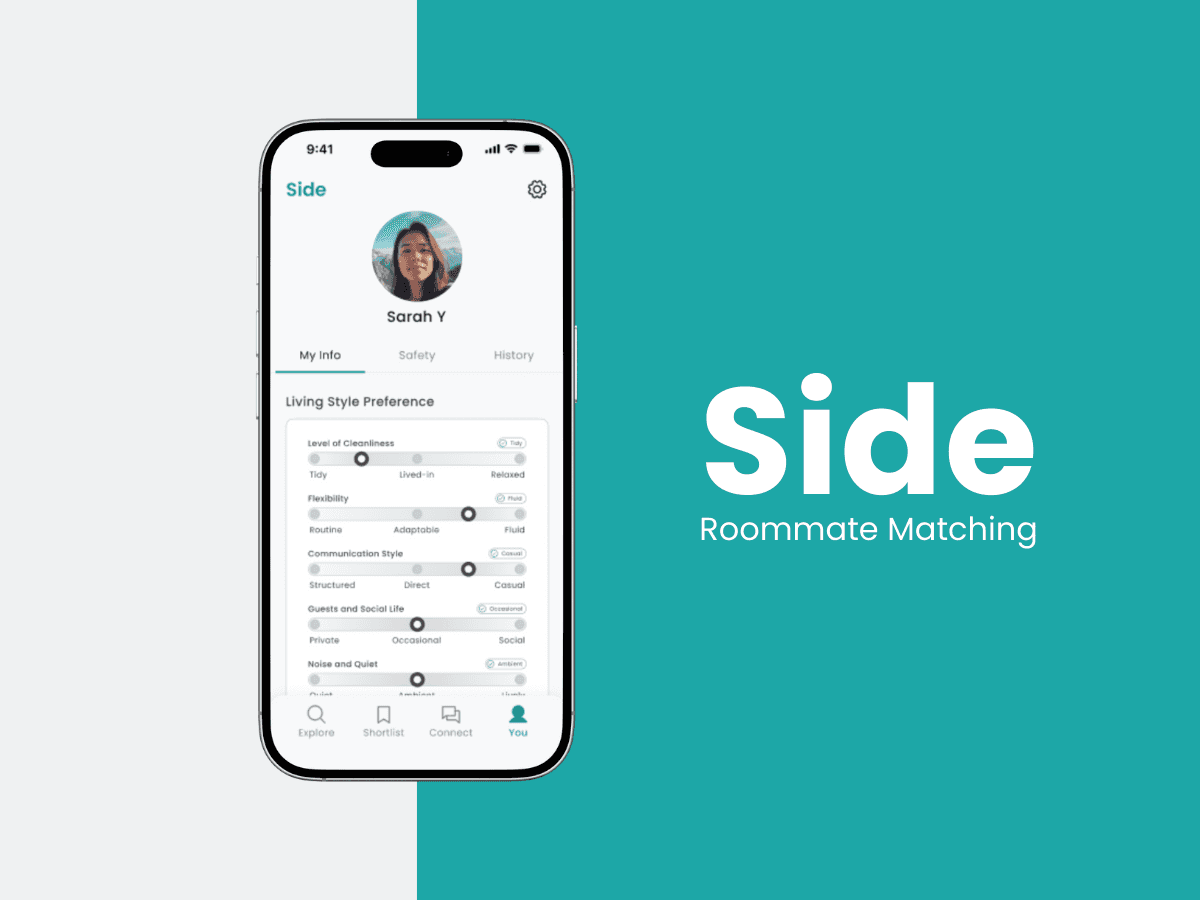
Refine Onboarding for Clarity and Control: We will develop an onboarding structure to prevent user frustration and ensure valuable data collection. Implement global navigation like a “Back” button in the quiz flow. Replace placeholder content with full, structured question sets using distinct answering options (e.g., Likert scales, binary choices) to reduce cognitive load. Add interactivity to the “Living Style” graph, allowing users to tap nodes for detailed trait information.
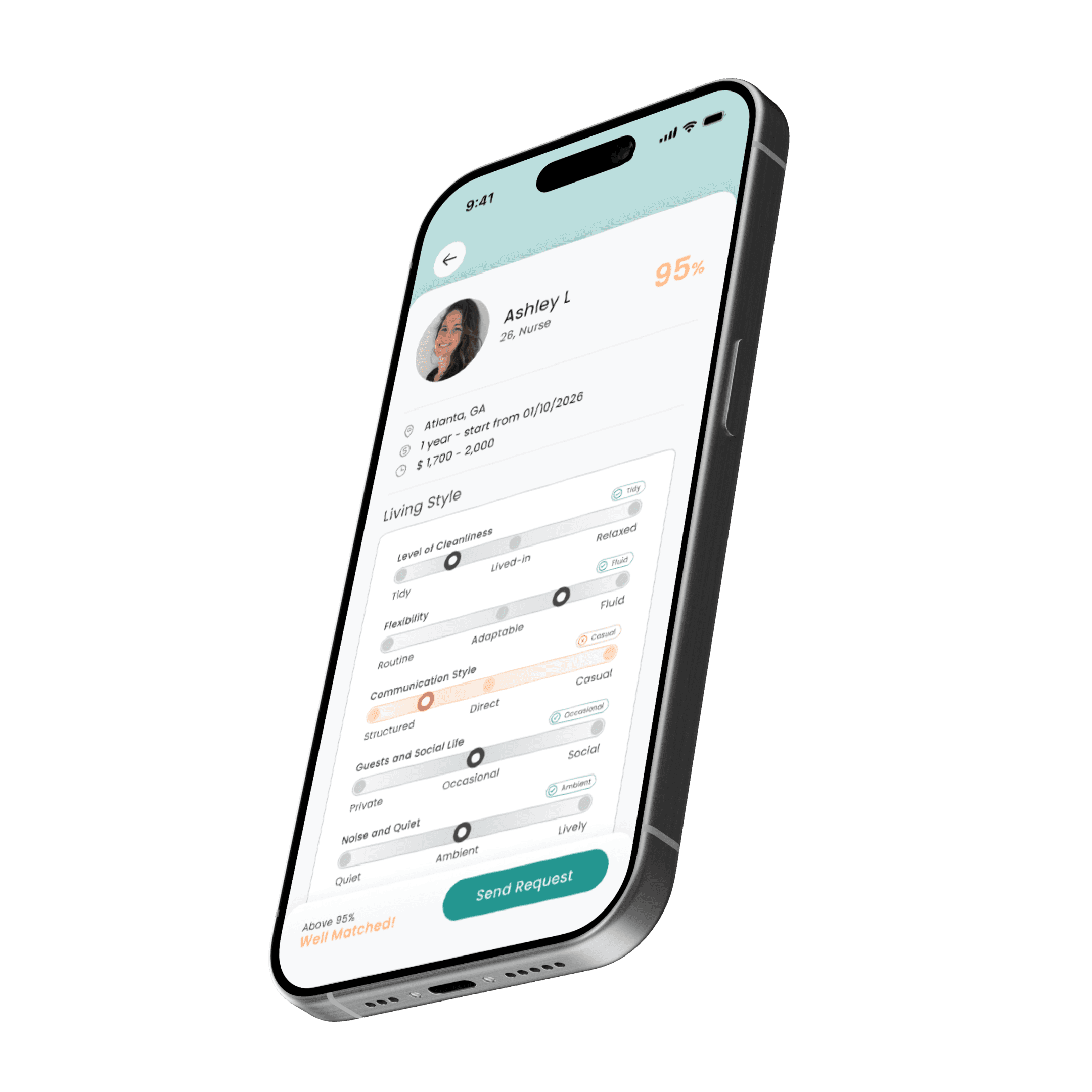
Refine the Matching Process: We will design in-app guidance or tooltips that explain how specific quiz answers translate into a compatibility score. Furthermore, we will create a clear visual language that highlights why a user is a good match rather than just showing a generic number.
Improve Request Visibility: To ensure users don't miss critical connection requests, we will distinguish them from general system notifications. This involves moving requests from the general notification center to a prominent top-level location, like a dashboard banner, and reducing friction by minimizing clicks needed to view and accept them.
Integrate Financial Reliability Metrics: We will conduct targeted research to address the critical need for financial vetting in roommate selection. Based on these findings, we will incorporate questions regarding budget and payment habits into the onboarding flow, ensuring matches are compatible both personally and financially.
Narrow Product Scope: We will focus our product efforts entirely on the matching experience to reduce complexity and avoid user confusion. By de-prioritizing post-matching features (such as household management), the user flow will be streamlined, better serving the single goal of finding the right roommate.